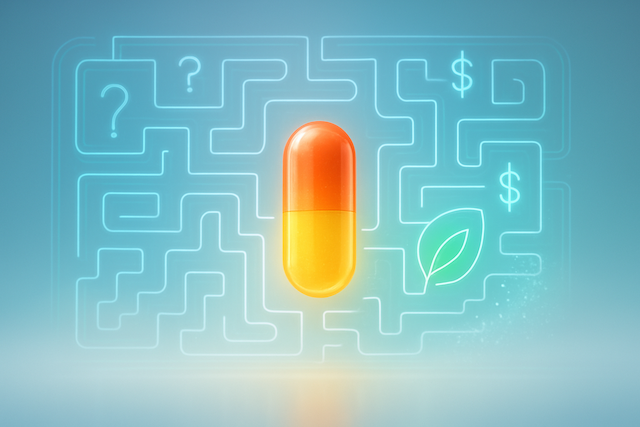
The Multivitamin Maze: Essential Boost or Costly Placebo?

Download Suplify App
Track your supplements, optimize your routine, and achieve better results with Suplify App. Our app helps you manage dosages, set reminders, and monitor your progress all in one place.

Scan the QR Code to download Suplify App
Ou acesse diretamente:
The Multivitamin Maze: Essential Boost or Costly Placebo?
In the vast and often confusing landscape of health and wellness, few topics spark as much debate as the humble multivitamin. From glossy magazine ads promising boundless energy to stern warnings from health experts about "expensive urine," the discourse is polarized. Millions worldwide pop a daily multi, convinced they're safeguarding their health or filling crucial nutritional gaps. But is this daily ritual a genuinely necessary cornerstone of good health, or are we simply falling prey to clever marketing and a desire for a quick fix?
This isn't a simple yes or no question. The truth, like most things in nutrition, is nuanced, depending heavily on individual circumstances, dietary habits, and lifestyle. Let's cut through the noise, examine the scientific evidence, and separate the compelling facts from the persistent fiction surrounding multivitamins.
The 'Nutritional Insurance' Argument: Bridging the Gaps
The primary appeal of a multivitamin lies in its promise of "nutritional insurance." In an ideal world, a balanced, whole-food diet would provide every single nutrient our bodies need. However, our modern reality often falls short of this ideal. Fast-paced lifestyles, reliance on processed foods, and even agricultural practices that deplete soil nutrients can make it challenging to consistently obtain optimal levels of all essential vitamins and minerals from diet alone.
Consider the prevalence of certain deficiencies: Vitamin D deficiency is widespread, especially in regions with limited sunlight exposure. Many women of childbearing age struggle with adequate iron intake. Vegetarians and vegans often need to pay close attention to Vitamin B12, iron, and zinc. Even individuals who believe they eat "healthily" might unknowingly have suboptimal levels of certain micronutrients due to restrictive diets, food intolerances, or simply a lack of variety.
In these scenarios, a well-formulated multivitamin can act as a safety net, topping up intake of nutrients that might be slightly lacking. It's not a substitute for a nutritious diet, but rather a complementary tool designed to fill small, consistent gaps, ensuring the body has the fundamental building blocks it needs for optimal function. Think of it as a helpful backup system, not the main engine.
Who Benefits Most? Specific Scenarios for Supplementation
While the general population might view multivitamins as a universal necessity, scientific evidence suggests that certain groups stand to gain more significant benefits. For these individuals, supplementation moves beyond "insurance" to become a genuinely important component of their nutritional strategy:
* Pregnant and Breastfeeding Women: Folic acid (folate) is crucial before and during early pregnancy to prevent neural tube defects. Iron needs also increase significantly. Prenatal vitamins are specifically formulated to meet these elevated requirements.
* The Elderly: As we age, nutrient absorption can decrease, and appetite may diminish. Vitamin B12 absorption often declines, and Vitamin D synthesis from sunlight becomes less efficient. Multivitamins tailored for seniors can address these age-related challenges.
* Vegans and Vegetarians: Eliminating meat, dairy, and eggs from the diet necessitates careful attention to nutrients primarily found in animal products, such as Vitamin B12, iron, zinc, calcium, and Omega-3 fatty acids. A targeted multivitamin or specific single supplements become highly recommended.
* Individuals with Restrictive Diets or Malabsorption Issues: People with food allergies, intolerances, or those following highly restrictive diets (e.g., certain elimination diets, very low-calorie diets) may struggle to get a full spectrum of nutrients. Similarly, individuals with conditions like Celiac disease, Crohn's disease, or those who have undergone bariatric surgery often have impaired nutrient absorption and require supplementation.
* Those with Increased Nutritional Needs: Athletes, individuals under chronic stress, or those recovering from illness or injury may have temporarily elevated needs for certain vitamins and minerals to support recovery and performance. However, these are often better addressed with specific supplements rather than a general multi.
For these groups, a multivitamin isn't just a "nice-to-have"; it can be a vital component of maintaining health and preventing deficiencies that could have significant health consequences. Always consult with a healthcare professional to determine if you fall into one of these categories and what specific nutrients you might need.
The Dark Side of Over-Supplementation: Are You Getting Too Much?
While the potential for deficiency is a concern, so too is the risk of over-supplementation. The "more is better" mentality, unfortunately, doesn't apply to micronutrients. Excessive intake of certain vitamins and minerals can be harmless at best (resulting in "expensive urine" as your body simply excretes the excess) and actively harmful at worst.
Fat-soluble vitamins (A, D, E, K) are stored in the body's fatty tissues, meaning they can accumulate to toxic levels if taken in excess. For example, too much Vitamin A can lead to liver damage, headaches, and bone weakness. High doses of Vitamin B6 have been linked to nerve damage. Even water-soluble vitamins, which are generally excreted, can cause problems in extremely high doses (e.g., niacin flushing, digestive issues from high Vitamin C).
Furthermore, multivitamins can interact with prescription medications. For instance, Vitamin K can interfere with blood thinners like warfarin, and certain minerals can affect the absorption of antibiotics or thyroid hormones. It's crucial to be transparent with your doctor about any supplements you're taking to avoid adverse interactions.
The quality and formulation of multivitamins also vary widely. Some cheaper brands may use less bioavailable forms of nutrients, meaning your body struggles to absorb and utilize them effectively. Always opt for reputable brands that conduct third-party testing to ensure purity and potency. Understanding the Tolerable Upper Intake Levels (ULs) for each nutrient is also key to safe supplementation, ensuring you don't inadvertently exceed safe limits through your diet and supplements combined.
Diet First: The Foundation of Optimal Nutrition
Regardless of your stance on multivitamins, one truth remains immutable: whole foods are the undisputed champions of nutrition. No pill, however comprehensive, can replicate the synergistic complexity of nutrients, fiber, antioxidants, and phytonutrients found in a diverse diet of fruits, vegetables, whole grains, lean proteins, and healthy fats.
Whole foods offer more than just individual vitamins and minerals. They provide fiber, which is crucial for digestive health and satiety, and a vast array of phytochemicals that work together in ways scientists are still discovering to protect against disease. When you eat an apple, you're not just getting Vitamin C; you're getting fiber, quercetin, catechins, and a host of other beneficial compounds that work together to promote health.
A multivitamin should never be seen as an excuse to neglect a healthy diet or compensate for poor eating habits. Its role is supplementary. Focus first on building a plate rich in nutrient-dense foods: colorful produce, lean proteins, healthy fats, and complex carbohydrates. Prioritize variety to ensure a broad spectrum of nutrients. If, after establishing this strong dietary foundation, you identify specific needs or belong to a group that historically benefits from supplementation, then a multivitamin can be a valuable addition.
The Smart Way to Supplement: Track Your Intake
So, are multivitamins necessary? The answer is a resounding "it depends." For the average healthy individual with a balanced diet, they might offer minimal additional benefit beyond a placebo effect. For specific populations with increased needs, dietary restrictions, or absorption issues, they can be a critical tool for maintaining health. The key lies in informed, personalized decisions, always in consultation with a healthcare professional. Avoid the "more is better" trap, prioritize whole foods, and consider your unique physiological needs.
In a world brimming with supplement options, managing what you take, when you take it, and how it impacts you can be a challenge. That's why we created SupTrack – your ultimate companion for mindful supplementation. SupTrack helps you monitor your supplement consumption, set personalized reminders so you never miss a dose, and track your results over time, giving you a clear picture of what's working for your body. Take control of your health journey and make informed decisions about your supplement regimen.
Download SupTrack today and transform the way you manage your supplements!
Download Suplify App
Track your supplements, optimize your routine, and achieve better results with Suplify App. Our app helps you manage dosages, set reminders, and monitor your progress all in one place.
Scan the QR Code to download Suplify App
Ou acesse diretamente:
Ryan Costa