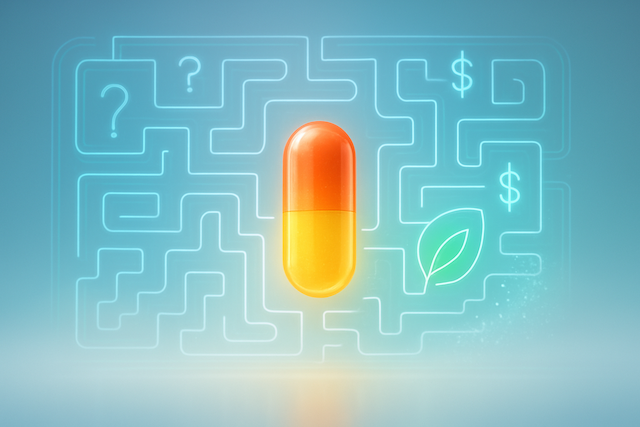
The Multivitamin Maze: Are You Boosting Your Health or Just Your Wallet?

Download Suplify App
Track your supplements, optimize your routine, and achieve better results with Suplify App. Our app helps you manage dosages, set reminders, and monitor your progress all in one place.

Scan the QR Code to download Suplify App
Ou acesse diretamente:
The Multivitamin Maze: Are You Boosting Your Health or Just Your Wallet?
In a world brimming with health advice, glossy advertisements, and promises of enhanced vitality, the humble multivitamin often takes center stage. From childhood chewables to senior-specific blends, these daily pills are marketed as an essential safety net, a nutritional insurance policy against the perceived inadequacies of our modern diets. But beneath the compelling claims and convenient packaging lies a complex question: are multivitamins truly necessary for everyone, or are we often pouring money into a habit that delivers more hope than tangible health benefits? For many, the decision to take a multivitamin is a routine, almost unquestioned part of their wellness regimen. Yet, a closer look at the science, our individual dietary patterns, and specific health needs reveals a far more nuanced picture than the blanket marketing suggests. Navigating this "multivitamin maze" requires understanding when these supplements can indeed fill crucial gaps, and when they might simply be a distraction from the fundamental principles of good nutrition.
The Multivitamin Myth: A Universal Panacea?
For decades, multivitamins have been promoted as a universal solution, a daily dose of health that guarantees all your nutritional bases are covered. The underlying premise is often that modern diets are inherently deficient, laden with processed foods and stripped of vital nutrients, thus making supplementation a non-negotiable step for optimal well-being. This belief is reinforced by popular media, celebrity endorsements, and the sheer accessibility of these products.
However, scientific consensus on the widespread necessity of multivitamins for the general healthy population is, at best, mixed. Numerous large-scale studies, including those published in prestigious journals like *Annals of Internal Medicine* and *JAMA*, have concluded that for most healthy adults eating a reasonably balanced diet, taking a daily multivitamin does not significantly reduce the risk of chronic diseases like heart disease, cancer, or cognitive decline. In fact, for those with no specific deficiencies, the additional nutrients from a multivitamin are often simply excreted, turning expensive supplements into nothing more than "designer urine." The idea that a single pill can magically compensate for poor dietary choices or a sedentary lifestyle is a seductive one, but it largely remains unsubstantiated by robust evidence for the average individual. While they pose little harm for most, they also offer little measurable benefit beyond a false sense of security.
Food First: The Undeniable Power of Whole Foods
Before reaching for a pill, it’s critical to remember the undisputed champion of nutrition: whole, unprocessed foods. Fruits, vegetables, whole grains, lean proteins, and healthy fats are not just sources of individual vitamins and minerals; they are complex packages of synergistic nutrients. When we eat an apple, for instance, we’re not just getting Vitamin C; we’re also consuming fiber, antioxidants, phytonutrients, and a host of other beneficial compounds that work together in ways supplements simply cannot replicate. This "food matrix" enhances bioavailability, meaning our bodies can absorb and utilize nutrients more effectively than when they are isolated in a pill.
Consider the example of antioxidants. While a multivitamin might contain isolated Vitamin E, natural sources like nuts and seeds offer a spectrum of tocopherols and tocotrienols that have a more powerful, combined antioxidant effect. Fiber, essential for digestive health and blood sugar regulation, is almost entirely absent from multivitamins. Furthermore, the sheer volume and variety of phytonutrients found in plants – compounds like flavonoids, carotenoids, and polyphenols – are far beyond the scope of any supplement. Prioritizing a diet rich in diverse, colorful, and minimally processed foods is the most effective and sustainable strategy for achieving comprehensive nutrient intake, supporting overall health, and significantly reducing the need for routine supplementation. It’s about building a strong nutritional foundation rather than patching holes with supplements.
When Might a Multivitamin Be More Than a 'Just-In-Case'?
While a multivitamin might not be a universal panacea, there are specific situations and populations where targeted supplementation can indeed play a crucial and beneficial role. These aren't about general "wellness" but rather addressing specific, documented nutritional gaps or increased demands that a regular diet may struggle to meet.
* Pregnancy and Pre-Conception: Folic acid is vital to prevent neural tube defects, and iron needs increase significantly. A prenatal multivitamin is strongly recommended by healthcare professionals.
* Restrictive Diets: Vegans and vegetarians, for example, often struggle to obtain adequate Vitamin B12 (found primarily in animal products), iron, zinc, iodine, and omega-3 fatty acids. A well-formulated multivitamin or specific targeted supplements can be invaluable.
* Malabsorption Issues: Individuals with gastrointestinal conditions like Celiac disease, Crohn's disease, or those who have undergone bariatric surgery may have impaired nutrient absorption, necessitating comprehensive supplementation.
* Elderly Individuals: As we age, nutrient absorption can decrease (e.g., Vitamin B12 due to reduced stomach acid), and dietary intake may decline. Vitamin D, B12, and calcium are common concerns.
* Certain Medications: Some prescription drugs can interfere with nutrient absorption or increase nutrient excretion, leading to deficiencies. For example, metformin can deplete B12.
* Very Low-Calorie or Restrictive Diets: Individuals adhering to medically supervised very low-calorie diets, or those with severe food allergies/intolerances that drastically limit food groups, may benefit from a multivitamin to prevent deficiencies.
* Known Deficiencies: If a blood test reveals a specific deficiency (e.g., Vitamin D, iron), a doctor may recommend a targeted supplement, often at a higher dose than a typical multivitamin.
In these scenarios, a multivitamin or specific nutrient supplements are not a "just-in-case" measure but a strategic intervention based on unique physiological needs or medical circumstances. The key is *individualization* and, ideally, guidance from a healthcare professional or registered dietitian.
Navigating the Supplement Aisle: What to Look For (and Avoid)
If, after careful consideration and perhaps consultation with a professional, you determine that a multivitamin or specific supplement is appropriate for your needs, navigating the vast and often unregulated supplement aisle can be daunting. Not all supplements are created equal, and quality can vary wildly.
First and foremost, prioritize third-party verification. Look for certifications from independent organizations like USP (United States Pharmacopeia), NSF International, or ConsumerLab. These seals indicate that the product has been tested for purity, potency, and accuracy of ingredients listed on the label, and that it doesn't contain harmful contaminants. The FDA regulates supplements as food, not drugs, meaning they don't undergo the same rigorous testing for efficacy and safety *before* they hit the market.
Secondly, beware of mega-doses. More is not always better, and excessively high doses of certain vitamins (like fat-soluble Vitamins A, D, E, K) can be toxic. Stick to dosages close to the Recommended Dietary Allowances (RDAs) unless advised otherwise by a healthcare professional for a specific deficiency. Be wary of proprietary blends that don't disclose individual ingredient amounts.
Consider the form of the nutrients. For example, magnesium glycinate is generally better absorbed than magnesium oxide, and methylcobalamin is a more bioavailable form of Vitamin B12 than cyanocobalamin for many. Researching these forms can make a difference in effectiveness.
Finally, read the entire ingredient list. Avoid products with excessive fillers, artificial colors, flavors, or unnecessary binders. If you have allergies, ensure the product is free from common allergens like gluten, dairy, or soy. Remember, a multivitamin is meant to supplement, not replace, a healthy diet.
Making Informed Choices and Tracking Your Progress
The decision of whether or not to take a multivitamin is a personal one, ideally guided by a "food first" philosophy and, when necessary, informed by individual health needs and professional advice. For most healthy adults, a varied, nutrient-rich diet remains the most effective way to obtain essential vitamins and minerals. However, for specific populations or those with documented deficiencies, a well-chosen multivitamin or targeted supplement can be a valuable tool to support overall health.
Whether you're taking a daily multivitamin, a specific mineral, or a combination of supplements, staying organized and consistent is key to understanding their potential impact. This is where SupTrack, our intuitive supplement tracking app, becomes an invaluable partner. SupTrack empowers you to effortlessly monitor your supplement consumption, ensuring you take the right dose at the right time with customizable reminders. Beyond just logging, you can track your progress, note any changes in how you feel, and gain insights into how your supplement regimen aligns with your wellness goals. SupTrack helps you move beyond guesswork, transforming your supplement routine into a mindful, data-driven approach to health. Download SupTrack today and take control of your supplement journey, ensuring every pill you take is a deliberate step towards a healthier you.
Download Suplify App
Track your supplements, optimize your routine, and achieve better results with Suplify App. Our app helps you manage dosages, set reminders, and monitor your progress all in one place.
Scan the QR Code to download Suplify App
Ou acesse diretamente:
Ryan Costa