
Nature's Bounty vs. Lab-Crafted Potency: The Ultimate Supplement Showdown
Download Suplify App
Track your supplements, optimize your routine, and achieve better results with Suplify App. Our app helps you manage dosages, set reminders, and monitor your progress all in one place.

Scan the QR Code to download Suplify App
Ou acesse diretamente:
Nature's Bounty vs. Lab-Crafted Potency: The Ultimate Supplement Showdown
In a world increasingly focused on health and wellness, dietary supplements have become a staple in many daily routines. From boosting immunity to enhancing athletic performance, a dizzying array of pills, powders, and tinctures promise a path to optimal well-being. Yet, amidst this abundance, a fundamental debate rages: are natural, whole-food derived supplements inherently superior to their synthetic, laboratory-created counterparts? The question isn't just academic; it touches on efficacy, absorption, purity, and even ethical considerations. Navigating this complex landscape can be daunting, but understanding the core differences between natural and synthetic supplements is the first step toward making informed choices that align with your health goals and personal philosophy. This deep dive aims to demystify the natural vs. synthetic debate, helping you discern what truly matters when it comes to supplementing your diet.
Understanding the Distinction: What's "Natural" and What's "Synthetic"?
The terms "natural" and "synthetic" are often thrown around loosely in the supplement industry, leading to confusion. It’s crucial to understand what each truly signifies.
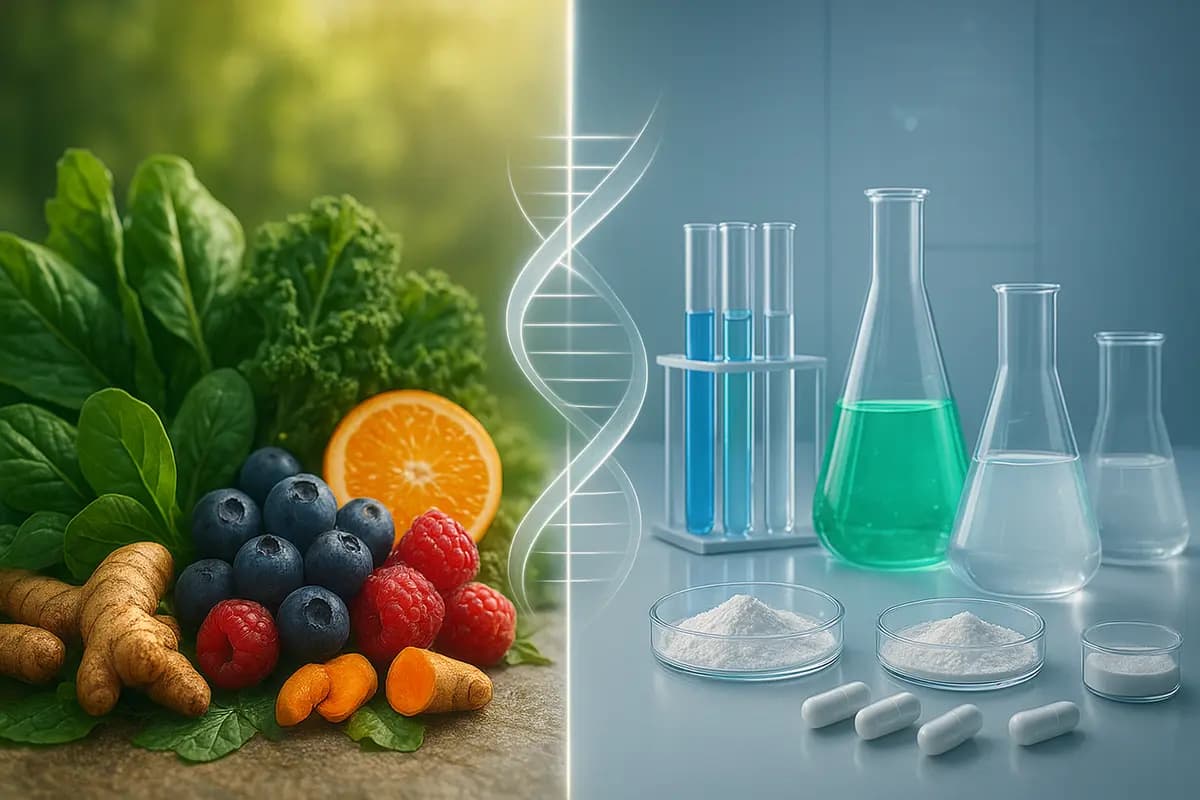
Natural supplements, often referred to as "whole food" or "food-derived" supplements, are sourced directly from plants, animals, or other natural origins. The key characteristic here is that the nutrient is presented within its original biological matrix, alongside a host of co-factors, enzymes, antioxidants, and phytonutrients that naturally occur with it. For example, a natural vitamin C supplement might be derived from acerola cherries or camu camu berries, providing not just ascorbic acid but also bioflavonoids and other compounds that naturally enhance its absorption and utilization. Similarly, B vitamins might be sourced from cultured yeast, offering a complex of B vitamins in a food-bound form. The philosophy behind natural supplements posits that these accompanying compounds create a synergistic effect, mimicking how the body would process nutrients from whole foods.
Synthetic supplements, on the other hand, are created in a laboratory setting through chemical processes. While they are often chemically identical or very similar to the nutrients found in nature, they are isolated compounds, stripped of the complex array of co-factors found in whole foods. A classic example is synthetic vitamin C, which is typically pure ascorbic acid. Synthetic vitamin E is often dl-alpha-tocopherol, whereas natural vitamin E is d-alpha-tocopherol, usually accompanied by other tocopherols and tocotrienols. The benefit of synthetic supplements often lies in their ability to provide precise dosages of specific nutrients, and their production can be more cost-effective and scalable. They aim to provide the isolated nutrient in a form the body can recognize and use, often at higher concentrations than naturally occurring sources could easily deliver.
The distinction isn't always black and white; some supplements might contain a blend of natural extracts and synthetic isolates. However, the core difference lies in the presence or absence of the natural food matrix and its accompanying compounds.
Bioavailability, Efficacy, and Absorption: Is One Superior?
One of the most fiercely debated aspects of natural versus synthetic supplements revolves around their bioavailability, efficacy, and how well the body absorbs and utilizes them.
Bioavailability refers to the proportion of a nutrient that, when ingested, is absorbed and available for use or storage in the body. Proponents of natural supplements often argue that the complex array of co-factors, enzymes, and other nutrients found in whole-food matrices enhances bioavailability. For instance, the bioflavonoids naturally present with vitamin C in fruit are thought to improve its absorption and efficacy. When nutrients are presented in their natural food form, the body is designed to recognize and process them more efficiently, potentially leading to better uptake and utilization compared to isolated synthetic forms. This concept is often referred to as the "food matrix effect," where the sum is greater than its parts.
However, this isn't always universally true. Many synthetic nutrients are designed to be highly bioavailable. For example, some B vitamins, like methylcobalamin (an active form of B12) or L-methylfolate (an active form of folate), are highly effective synthetic versions that can be more readily used by individuals with genetic variations affecting nutrient metabolism. In cases where a person has a deficiency or compromised digestive system, an isolated, highly absorbable synthetic form might be more efficient at raising nutrient levels than a less concentrated natural source.
The efficacy of a supplement – its ability to produce the desired health outcome – can also be a nuanced discussion. While natural forms might offer a broader spectrum of benefits due to synergistic compounds, synthetic forms can deliver targeted, potent effects for specific deficiencies. For example, iron supplements, whether natural (like heme iron from animal sources) or synthetic (like ferrous sulfate), aim to increase iron levels. The effectiveness often comes down to the dosage, the form of the nutrient, and the individual's unique physiological needs and absorption capabilities. For some nutrients, like vitamin D or certain minerals, the form (e.g., D3 vs. D2, chelated minerals vs. non-chelated) often matters more than whether it's "natural" or "synthetic." Ultimately, robust scientific evidence and individual response should guide the assessment of efficacy, rather than relying solely on the "natural" label.
Purity, Potency, and Potential Contaminants
Beyond bioavailability, the purity, potency, and potential for contaminants are critical considerations for both types of supplements.
Purity is a major concern. For natural supplements, the risk often stems from their source environment. Pesticides, herbicides, heavy metals (like lead, mercury, arsenic, cadmium), and other environmental toxins can accumulate in plants and marine life from which supplements are derived. The quality of soil, water, and air in the harvesting region plays a significant role. Furthermore, processing methods can introduce contaminants or reduce nutrient integrity if not carefully managed. For synthetic supplements, purity concerns shift to the manufacturing process itself. Residual solvents, unreacted chemicals, or byproducts from the synthesis process can sometimes be present. Additionally, both natural and synthetic supplements can contain unwanted fillers, binders, or artificial additives to improve texture, taste, or shelf life.
Potency also differs significantly. Natural supplements can have variable nutrient concentrations depending on factors like growing conditions, harvest time, and processing techniques. A "natural" vitamin C from acerola, for instance, might have a lower, less consistent concentration of ascorbic acid compared to a standardized synthetic version. While the whole-food complex is its advantage, ensuring consistent potency can be a challenge. Synthetic supplements, by their nature, are typically manufactured to deliver a precise, standardized dosage of the isolated nutrient, offering predictability and consistency in potency.
Given these concerns, third-party testing becomes paramount for *all* supplements, regardless of their origin. Independent laboratories can verify the declared potency, confirm the absence of harmful contaminants (heavy metals, pesticides, microbes), and ensure the product meets quality standards. The supplement industry is largely self-regulated in many countries, including the United States (under the FDA's DSHEA act), meaning manufacturers are responsible for ensuring their products are safe and accurately labeled *before* they hit the market. This makes it crucial for consumers to seek out brands that voluntarily engage in rigorous third-party testing and transparency.
Cost, Accessibility, and Ethical Considerations
The choice between natural and synthetic supplements also often comes down to practicalities like cost and accessibility, alongside broader ethical and environmental concerns.
Cost is frequently a deciding factor. Natural, whole-food derived supplements tend to be more expensive than their synthetic counterparts. This higher price tag is a reflection of several factors: the cost of sourcing high-quality raw materials (e.g., organic fruits, specific herbs), the often more complex and gentle extraction processes required to preserve the delicate food matrix, and the potentially lower yield of concentrated nutrients per batch. Synthetic supplements, on the other hand, benefit from chemical synthesis, which can often be scaled for mass production more efficiently, leading to lower manufacturing costs and, consequently, lower consumer prices. For budget-conscious individuals, synthetic supplements often offer a more affordable way to address specific nutrient deficiencies.
Accessibility is another point of differentiation. Synthetic vitamins and minerals are widely available in almost any pharmacy, supermarket, or online retailer. Their stability and ease of production make them ubiquitous. Natural, whole-food complex supplements, particularly those from specialized sources or organic origins, might be less common and require seeking out specialty health food stores or specific online vendors.
Beyond personal finance, ethical and environmental considerations are increasingly influencing consumer choices. For natural supplements, questions arise about sustainable harvesting practices, biodiversity impact, and the environmental footprint of cultivation and transportation. For example, overharvesting certain botanicals can endanger plant species. For synthetic supplements, the environmental impact can involve the energy and resources used in chemical synthesis, the byproducts generated, and the disposal of chemical waste. While both categories have potential ethical footprints, the nature of these impacts differs. Consumers concerned about these aspects may need to research individual brands' commitment to sustainable sourcing, ethical labor practices, and environmentally responsible manufacturing.
Making Your Choice: The Informed Approach
The debate between natural and synthetic supplements is not about one being definitively "better" than the other across the board. Instead, it's a nuanced discussion where the optimal choice often depends on the specific nutrient, individual needs, budget, personal health philosophy, and scientific evidence.
For some, the appeal of a "whole food" approach, believing in the synergistic power of naturally occurring compounds, makes natural supplements the preferred choice. For others, particularly those with specific deficiencies, malabsorption issues, or genetic predispositions, the precise dosage, affordability, and targeted efficacy of a well-formulated synthetic nutrient may be more beneficial.
Here's an informed approach:
* Research Specific Nutrients: Understand the differences in forms for each nutrient you consider. For example, some active forms of B vitamins are highly beneficial regardless of natural/synthetic origin.
* Consult Professionals: Talk to your doctor, dietitian, or a qualified nutritionist. They can help identify potential deficiencies, discuss interactions with medications, and recommend supplements suitable for your unique health profile.
* Prioritize Third-Party Testing: Always look for supplements that have been independently tested for purity, potency, and absence of contaminants. Certifications from organizations like USP, NSF International, or ConsumerLab.com are good indicators of quality.
* Read Labels Carefully: Pay attention to ingredients, dosages, and any additional fillers or additives.
* Consider Your Budget and Values: Factor in what you can realistically afford and if the product aligns with your ethical and environmental concerns.
Regardless of whether you choose natural or synthetic, consistency and tracking are key to realizing the benefits of any supplement regimen. Knowing what you take, when you take it, and how your body responds is crucial for optimizing your health journey. This is where modern tools can be incredibly valuable.
Take control of your supplement intake and experience the difference tracking can make. Download SupTrack today to effortlessly monitor your supplement consumption, set personalized reminders, and track your results, helping you stay consistent and achieve your wellness goals, whether you lean towards nature's bounty or lab-crafted potency.
Download Suplify App
Track your supplements, optimize your routine, and achieve better results with Suplify App. Our app helps you manage dosages, set reminders, and monitor your progress all in one place.
Scan the QR Code to download Suplify App
Ou acesse diretamente:
Ryan Costa