Multivitamin Myth or Must-Have? Separating Fact from Fiction for Your Health

Download Suplify App
Track your supplements, optimize your routine, and achieve better results with Suplify App. Our app helps you manage dosages, set reminders, and monitor your progress all in one place.

Scan the QR Code to download Suplify App
Ou acesse diretamente:
Multivitamin Myth or Must-Have? Separating Fact from Fiction for Your Health
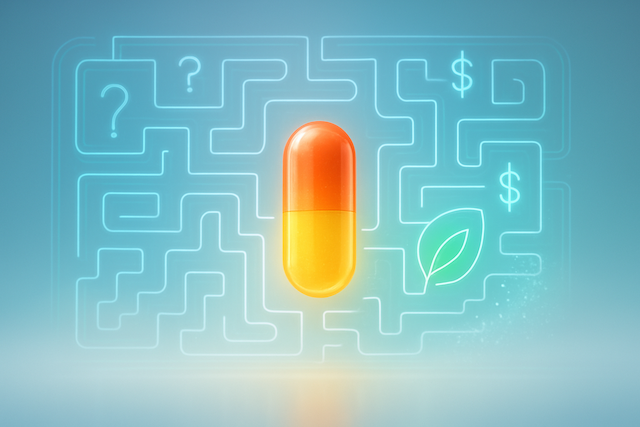
Every morning, millions reach for that familiar bottle: the daily multivitamin. It’s a habit deeply ingrained in our collective health consciousness, often seen as an insurance policy against nutritional gaps. We're bombarded with conflicting messages – some experts touting their necessity, others dismissing them as expensive placebos. So, what’s the real story? In an age where information overload makes informed decisions difficult, understanding the role, benefits, and limitations of multivitamins is crucial for anyone seeking optimal health. Are they a vital component of your wellness routine, or merely a hopeful gesture? Let's dive deep into the science and separate the marketing hype from genuine nutritional wisdom.
The 'Ideal' vs. Reality: Can Food Alone Truly Do It?
The gold standard for nutrient intake unequivocally remains a diverse, whole-food-based diet. Fruits, vegetables, lean proteins, healthy fats, and whole grains provide a complex matrix of vitamins, minerals, fiber, and phytonutrients that work synergistically in ways supplements often cannot replicate. In an ideal world, one where every meal is perfectly balanced, locally sourced, organic, and prepared with maximum nutrient retention, a multivitamin might indeed be redundant for most healthy individuals.
However, the reality of modern life paints a different picture. Busy schedules, reliance on processed foods, global food chains that deplete nutrients through long transport, and even agricultural practices that have led to soil depletion mean that achieving comprehensive nutrition consistently can be a significant challenge. Furthermore, individual factors such as stress, environmental toxins, and a lack of consistent access to fresh, nutrient-dense foods can further compromise even the most well-intentioned dietary efforts. While the goal should always be to maximize nutrient intake from food, it's becoming increasingly difficult for many to consistently hit all their targets, making the "food alone" argument less universally applicable than once thought.
Who Might Actually Benefit from a Targeted Supplement?
While a general multivitamin isn't a magic bullet for everyone, specific populations and circumstances can indeed warrant supplementation. These individuals often have unique nutritional demands or limitations that make it difficult to meet their needs through diet alone:
* Vegans and Vegetarians: Plant-based diets, while incredibly healthy, can be deficient in certain nutrients like Vitamin B12 (found almost exclusively in animal products), iron, zinc, calcium, iodine, and omega-3 fatty acids. A targeted multivitamin or individual supplements can fill these critical gaps.
* Pregnant and Breastfeeding Women: Nutrient demands soar during these periods. Folic acid is vital to prevent neural tube defects, iron is crucial to support increased blood volume, and Vitamin D and calcium are essential for fetal bone development. Many standard multivitamins are not sufficient, necessitating prenatal-specific formulations.
* Older Adults: As we age, nutrient absorption can decrease, and appetite often declines. Vitamin B12 absorption can be impaired due to reduced stomach acid, and Vitamin D synthesis from sunlight becomes less efficient. Calcium and Vitamin D are also critical for bone health, especially in post-menopausal women.
* Individuals with Restricted Diets or Malabsorption Issues: People with allergies, intolerances (like celiac disease), or digestive disorders (e.g., Crohn's, ulcerative colitis, bariatric surgery patients) may struggle to absorb nutrients efficiently or follow highly restrictive diets that exclude nutrient-rich foods.
* Heavy Exercisers/Athletes: Increased physical activity can elevate the demand for certain vitamins and minerals involved in energy production, muscle repair, and recovery.
* People on Certain Medications: Some medications can interfere with nutrient absorption or deplete specific vitamins and minerals. For example, proton pump inhibitors can affect B12 absorption, and diuretics can lead to potassium and magnesium loss.
* Those with Documented Deficiencies: The most straightforward case for supplementation is a clinically diagnosed deficiency (e.g., Vitamin D deficiency, iron-deficiency anemia). In these cases, specific, often high-dose, supplements are prescribed to restore levels.
For these groups, a thoughtfully chosen supplement can move beyond an "insurance policy" to become a vital component of maintaining health and preventing deficiency-related problems.
The Pitfalls and Perils: When More Isn't Better
While multivitamins can be beneficial for certain groups, it's crucial to acknowledge that "more is not always better." Taking excessive amounts of certain vitamins, especially fat-soluble ones (A, D, E, K), can lead to toxicity because they are stored in the body rather than readily excreted. For example, too much Vitamin A can cause liver damage, and excessive Vitamin D can lead to hypercalcemia, which can harm kidneys and heart.
Water-soluble vitamins (B vitamins, C) are generally safer in higher doses as the body flushes out excess, often leading to the "expensive urine" phenomenon where you excrete unused nutrients. However, even some water-soluble vitamins, like high-dose B6, can cause nerve damage over time.
Beyond toxicity, there are other considerations. Many supplements contain synthetic forms of nutrients that may not be as bioavailable or effective as those found naturally in food. Furthermore, interactions with prescription medications are a real concern; for instance, Vitamin K can interfere with blood thinners like warfarin. Finally, the quality of supplements varies widely. The industry is not as tightly regulated as pharmaceuticals, meaning products can contain inaccurate dosages, contaminants, or fail to dissolve properly, rendering them ineffective. Choosing reputable brands that undergo third-party testing is paramount.
Making an Informed Choice: Consulting Experts and Listening to Your Body
Given the complexities, the decision to take a multivitamin or any supplement should not be taken lightly or based solely on anecdotal evidence or marketing claims. The most responsible approach involves a personalized strategy:
1. Assess Your Diet: Start by honestly evaluating your daily food intake. Are you regularly consuming a wide variety of fruits, vegetables, whole grains, and lean proteins? Identifying dietary gaps is the first step.
2. Consult a Healthcare Professional: This is perhaps the most critical step. Talk to your doctor or a registered dietitian. They can assess your overall health, lifestyle, medical history, and any medications you're taking. They might also recommend blood tests to check for specific deficiencies (e.g., Vitamin D, B12, iron levels), providing objective data to guide supplementation.
3. Consider Your Unique Needs: Based on your age, sex, activity level, health conditions, and dietary restrictions, your healthcare provider can help determine if a multivitamin or specific nutrient supplementation is warranted.
4. Prioritize Quality: If you do decide to supplement, choose high-quality products from reputable brands that use third-party testing (look for seals from USP, NSF International, or ConsumerLab.com).
5. Listen to Your Body: Pay attention to how you feel. While supplements aren't a quick fix, targeted supplementation for a diagnosed deficiency should lead to noticeable improvements over time.
Once you and your healthcare provider determine a personalized supplement regimen, consistency and tracking become paramount. Forget trying to remember what to take when, or if you even took it today. Our app, SupTrack, is designed specifically to help you monitor your supplement consumption, set reminders, and track results effortlessly. It transforms the guesswork into a streamlined, reliable routine, ensuring you get the most out of your chosen supplements.
The Bottom Line: Optimize Your Health with Awareness
The truth about multivitamins lies somewhere between a universal necessity and a complete waste of money. They are not a substitute for a healthy diet and lifestyle, nor can they cure chronic diseases. However, for specific individuals and circumstances, a well-chosen multivitamin or targeted supplement can play a valuable role in bridging nutritional gaps and supporting overall health. The key is to move beyond generic advice and adopt a personalized, informed approach guided by professional medical advice and your unique physiological needs. Make informed choices, prioritize whole foods, and view supplements as an adjunct, not a replacement.
Ready to take control of your supplement routine and ensure you're getting the most out of your health investments? Download SupTrack today and start monitoring your supplement consumption, setting intelligent reminders, and tracking your progress towards a healthier you!
Download Suplify App
Track your supplements, optimize your routine, and achieve better results with Suplify App. Our app helps you manage dosages, set reminders, and monitor your progress all in one place.
Scan the QR Code to download Suplify App
Ou acesse diretamente:
Ryan Costa