
Engineer Your Back: Precision Biomechanics for Maximizing Horizontal Row Gains
Download Suplify App
Track your supplements, optimize your routine, and achieve better results with Suplify App. Our app helps you manage dosages, set reminders, and monitor your progress all in one place.

Scan the QR Code to download Suplify App
Ou acesse diretamente:
Engineer Your Back: Precision Biomechanics for Maximizing Horizontal Row Gains
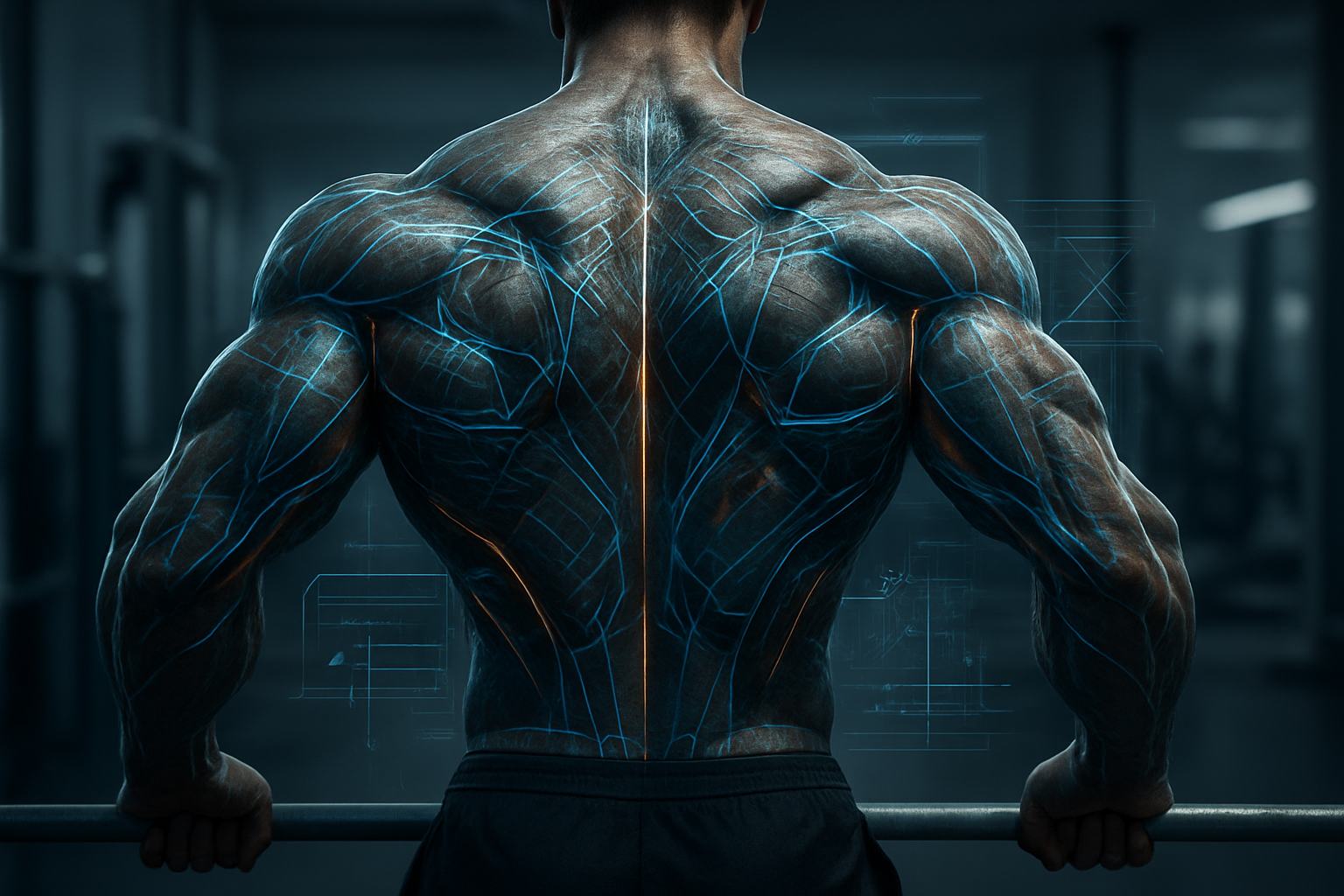
The quest for a truly formidable back is a cornerstone of serious strength training. While pull-ups and vertical pulls garner significant attention for developing impressive width, it's the often-underestimated horizontal row that truly sculpts the intricate thickness and density that defines a powerful physique. Many lifters incorporate rows into their routine, but few unlock their full potential. This isn't just about moving weight; it's about understanding the sophisticated biomechanics at play to transform your back from merely worked to truly chiseled, building a slab of muscle that commands attention from every angle. If you're ready to move beyond simply "pulling" and start "sculpting," prepare to delve into the advanced strategies that will redefine your horizontal row and, consequently, your back development.
The Biomechanical Blueprint of a Superior Row
To master the horizontal row, we must first dissect its fundamental biomechanics. At its core, a horizontal row is a pulling motion that primarily involves shoulder extension and scapular retraction. The major muscle groups engaged include the latissimus dorsi (lats) for shoulder adduction and extension, the rhomboids and middle trapezius for scapular retraction, and the posterior deltoids for shoulder extension and external rotation. Secondary muscles like the biceps brachii, brachialis, and brachioradialis assist in elbow flexion.
The magic happens when these muscle groups work in harmony, but more importantly, when you can selectively emphasize specific areas through nuanced adjustments. Understanding the distinction between developing "back thickness" and "back width" is crucial. Thickness primarily comes from the rhomboids, middle and lower traps, and the deep spinal erectors, giving the back a dense, rugged appearance. Width, on the other hand, is predominantly influenced by the lats, which create that coveted V-taper. While horizontal rows contribute to both, their execution can be heavily biased towards one or the other. True mastery involves manipulating your form to target these distinct qualities, ensuring no part of your back remains underdeveloped.
Grip, Elbow Path, and Muscle Activation – A Synergistic Dance
The seemingly minor details of your grip and elbow path are, in fact, the conductors of your back symphony. These variables dictate leverage, range of motion, and ultimately, which muscle groups bear the brunt of the work.
Grip Width:
* Narrow Grip: When your hands are closer together (e.g., a close-grip cable row or T-bar row), your elbows will naturally stay tucked closer to your body. This path emphasizes shoulder extension and leads to a greater stretch and contraction of the latissimus dorsi. If your goal is to maximize lat width and development, a narrow grip is often your most potent weapon.
* Medium Grip: A shoulder-width grip provides a balanced activation across the back musculature. It's an excellent choice for overall back development, hitting a good blend of lats, rhomboids, and traps. Most standard barbell rows fall into this category.
* Wide Grip: Taking a wider grip (e.g., wide-grip seated cable row or bent-over barbell row) forces your elbows to flare out further from your torso. This position increases the demand on the upper back musculature—specifically the rhomboids, middle trapezius, and posterior deltoids—making it ideal for building that dense "thickness" across your upper back.
Grip Type:
* Pronated (Overhand) Grip: Generally shifts more emphasis towards the upper back, traps, and rear deltoids, especially with a wider grip.
* Supinated (Underhand) Grip: Tends to increase biceps involvement, but for many, it also allows for a stronger, deeper contraction of the lats due to the mechanics of shoulder extension and rotation. It can be particularly effective for maximizing lat activation in movements like the bent-over barbell row.
* Neutral (Hammer) Grip: Often considered the most biomechanically friendly for the shoulders and elbows, a neutral grip (palms facing each other) allows for a powerful contraction and balanced activation of both the lats and upper back, making it excellent for exercises like dumbbell rows or specific cable row attachments.
Elbow Path:
This is perhaps the most critical variable.
* Elbows Tucked (Close to Body): Directly correlates with greater latissimus dorsi activation. When your elbows stay tight to your sides as you pull, you maximize shoulder extension and adduction, which are primary functions of the lats. Think of pulling your elbows *back and down* towards your hips.
* Elbows Flared (Away from Body): Activates more of the upper back musculature—rhomboids, middle traps, and posterior deltoids. If you want to build a thick, dense upper back, intentionally flaring your elbows slightly while maintaining control can be highly effective. Think of pulling your elbows *back and wide*.
The key is to consciously manipulate these variables based on your specific goals. Don't just grab and pull; choose your grip, hand width, and elbow path with intent.
The Forgotten Phase: Eccentric Control and Stretching
While the concentric (pulling) phase of the row often gets all the attention, the eccentric (lowering) phase is a goldmine for muscle growth that too many lifters overlook. Controlling the negative portion of the lift significantly increases time under tension, a well-established driver of hypertrophy. Moreover, a slow, controlled eccentric allows for a greater stretch on the targeted muscles, which can trigger stretch-mediated hypertrophy – a potent stimulus for growth.
To harness the power of the eccentric:
1. Resist the Weight Slowly: Instead of letting the weight drop back down, actively resist its descent. Aim for a 2-4 second eccentric phase. This might mean reducing the weight initially to maintain control.
2. Allow Full Scapular Protraction: At the bottom of the movement, consciously allow your shoulder blades to protract (move forward and spread apart). This maximizes the stretch on your lats and rhomboids, priming them for a powerful concentric contraction and enhancing overall range of motion. Think of reaching forward with your shoulders at the bottom, rather than keeping them rigidly retracted.
3. Avoid Momentum: The eccentric phase should be entirely controlled, setting the stage for an explosive, yet strict, concentric contraction. Swinging the weight up diminishes muscle activation and increases injury risk.
By focusing on this "forgotten" phase, you not only amplify the growth stimulus but also improve your mind-muscle connection, ensuring every rep counts.
Advanced Techniques for Maximal Stimulation and Progressive Overload
Once you've mastered the fundamentals of grip, elbow path, and eccentric control, you can layer on advanced techniques to further intensify your horizontal rows and shatter plateaus.
* Tempo Training: Assign specific durations to each phase of the rep. For example, a 3-1-2-1 tempo would mean 3 seconds eccentric, 1-second pause at the bottom, 2 seconds concentric, and 1-second peak contraction. This dramatically increases time under tension and forces you to maintain strict form.
* Peak Contraction Holds: At the top of the concentric phase, squeeze your shoulder blades together and hold the contraction for 1-2 seconds. This maximizes motor unit recruitment and creates an intense isometric contraction that can be incredibly effective for building density and improving mind-muscle connection.
* Stretch Overload (Partial Reps): After completing your full-range reps, perform a few partial reps concentrating on the bottom range of motion, where the lats and rhomboids are maximally stretched. This can provide an intense, growth-stimulating stretch, but use it sparingly due to increased injury potential if not performed carefully.
* Progressive Overload Beyond Weight: While increasing weight is crucial, progressive overload isn't just about heavier loads. It can also involve:
* Increasing reps or sets.
* Reducing rest times.
* Improving technique (e.g., stricter form with the same weight).
* Increasing time under tension (as with tempo training).
* Adding advanced techniques like drop sets or supersets.
To truly optimize your progress with these advanced strategies, consistent tracking is non-negotiable. You need to know what you're doing, how it's affecting your performance, and if your supplement regimen is supporting your goals. Imagine having a personal assistant for your fitness journey, meticulously logging your progress and ensuring you never miss a beat. That's where SupTrack comes in. Our innovative app helps you monitor supplement consumption, set crucial reminders so you never miss a dose, and track your workout results and overall progress. With SupTrack, you can clearly see how your dedication in the gym and your strategic supplement intake are translating into real-world gains, ensuring every rep, every set, and every scoop contributes to your goal of a thicker, wider back.
Conclusion: Row Smarter, Grow Bigger
Optimizing your horizontal rows is not about reinventing the wheel; it's about meticulously understanding and applying biomechanical principles to an already powerful exercise. By mastering the intricate interplay of grip width, grip type, elbow path, and leveraging the growth-stimulating power of eccentric control, you can transform your back development. Coupled with advanced techniques and diligent tracking, your horizontal rows will cease to be just another exercise and become a precision instrument for sculpting a back of unparalleled thickness and width.
Ready to take your back gains and overall fitness journey to the next level? Don't let your hard work in the gym be undermined by inconsistent supplement intake or a lack of precise progress tracking. Download SupTrack today from the App Store or Google Play and start optimizing every aspect of your fitness journey. Monitor your supplement consumption, set timely reminders, and track your results with unparalleled clarity, empowering you to achieve the back you've always envisioned.
Download Suplify App
Track your supplements, optimize your routine, and achieve better results with Suplify App. Our app helps you manage dosages, set reminders, and monitor your progress all in one place.
Scan the QR Code to download Suplify App
Ou acesse diretamente:
Ryan Costa