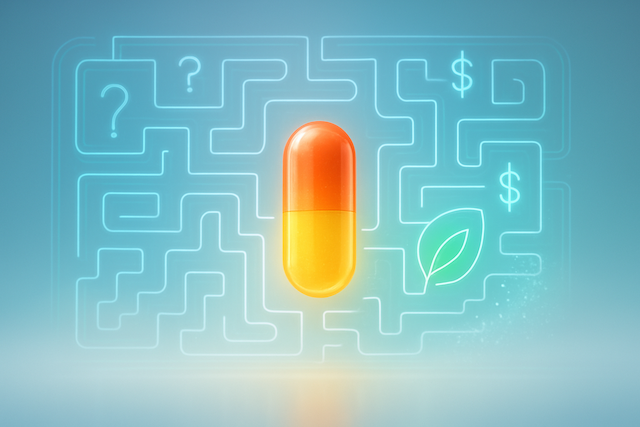
Are Multivitamins Really Necessary? Debunking the 'Expensive Urine' Myth

Download Suplify App
Track your supplements, optimize your routine, and achieve better results with Suplify App. Our app helps you manage dosages, set reminders, and monitor your progress all in one place.

Scan the QR Code to download Suplify App
Ou acesse diretamente:
Are Multivitamins Really Necessary? Debunking the 'Expensive Urine' Myth
In the bustling world of health and wellness, few topics spark as much debate as the necessity of multivitamins. Are they essential for filling nutritional gaps and boosting overall well-being, or are they, as some critics famously claim, just an expensive way to produce nutrient-rich urine? It’s a question that echoes through health forums, doctor’s offices, and dinner table conversations. With shelves brimming with countless formulations, it’s easy to feel overwhelmed and unsure whether investing in a daily multivitamin is truly beneficial or merely a placebo for peace of mind.
The truth, as often is the case, is more nuanced than a simple yes or no. While a perfect, balanced diet remains the gold standard for nutrient intake, modern life, dietary restrictions, and individual needs often present significant hurdles. This post aims to cut through the noise, explore the scientific perspectives, and help you determine whether a multivitamin might be a valuable addition to *your* personal health regimen, moving beyond the simplistic 'expensive urine' dismissal to a more informed understanding.
The 'Expensive Urine' Argument: What's the Truth?
The dismissive phrase "expensive urine" largely stems from the observation that when you take a multivitamin, particularly one containing large doses of water-soluble vitamins like Vitamin C and the B vitamins, your body will absorb what it needs and excrete the excess through your urine. This often results in a vivid yellow color, leading many to believe they are literally flushing money down the drain.
While it's true that the body eliminates unneeded water-soluble vitamins, this isn't the full story. The criticism often overlooks several key points. Firstly, the goal of a multivitamin isn't necessarily to mega-dose, but to provide foundational support and bridge common nutritional gaps that even well-intentioned diets might miss. Secondly, not all vitamins are treated equally. Fat-soluble vitamins (A, D, E, K) are stored in the body, and excessive intake can indeed be harmful, which is why balanced formulations are crucial and mega-dosing without professional guidance is ill-advised.
The concept of "bioavailability" is also critical here. It refers to the proportion of a nutrient that is absorbed from the diet and used for normal bodily functions. A nutrient might be present in a food or supplement, but if it's not in a readily absorbable form or if there are factors inhibiting its absorption (like certain medications or digestive issues), much of it might indeed pass through the body unused. High-quality multivitamins often use more bioavailable forms of nutrients to maximize absorption. So, while some excretion of water-soluble vitamins is normal, it doesn't automatically mean the entire supplement is wasted. It suggests the body is regulating its nutrient levels, and a portion was absorbed before the rest was discarded.
When a Balanced Diet Falls Short: Real-World Scenarios
While a diet rich in whole foods—fruits, vegetables, lean proteins, and healthy fats—is undoubtedly the best source of micronutrients, achieving this consistently is a significant challenge for many. Furthermore, certain life stages, dietary choices, and health conditions can create specific needs that even the most diligent eater might struggle to meet.
Consider these common scenarios where a multivitamin might move beyond mere insurance to genuine necessity:
* Restrictive Diets: Vegans and vegetarians often face challenges obtaining sufficient Vitamin B12 (found almost exclusively in animal products), Iron, Zinc, Calcium, and Omega-3 fatty acids. A targeted multivitamin can be crucial for these groups.
* Aging Adults: As we age, nutrient absorption can decrease, and appetite might wane. The elderly are often at risk for deficiencies in Vitamin B12 (due to reduced stomach acid), Vitamin D (less sun exposure and skin synthesis), and Calcium.
* Pregnancy and Lactation: The demand for nutrients like Folic Acid (to prevent neural tube defects), Iron, Calcium, and Vitamin D skyrockets during pregnancy and breastfeeding to support both mother and baby. Prenatal vitamins are a prime example of essential supplementation.
* Chronic Health Conditions & Medications: Individuals with conditions like celiac disease, Crohn's disease, or other malabsorption disorders may struggle to absorb nutrients properly. Certain medications (e.g., proton pump inhibitors, metformin) can also deplete specific vitamins or minerals.
* High Physical Demands: Athletes and those with highly active lifestyles may have increased needs for B vitamins for energy metabolism, antioxidants for recovery, and electrolytes.
* Limited Food Access or Quality: For those with limited access to fresh, nutrient-dense foods, or who rely heavily on processed options, a multivitamin can provide a basic nutritional safety net.
* Modern Agriculture and Soil Depletion: While debated, some argue that modern farming practices have led to reduced nutrient content in our produce compared to decades past, potentially making it harder to get optimal levels from diet alone.
In these contexts, a multivitamin isn't about compensating for a poor diet but about strategically filling gaps that are difficult, if not impossible, to address through food alone.
Beyond Basic Nutrition: The Nuances of Micronutrients
The conversation around multivitamins often fixates on preventing outright deficiencies, which are severe shortages leading to clinical diseases (like scurvy from Vitamin C deficiency or rickets from Vitamin D deficiency). However, many experts argue that optimal health requires more than just avoiding deficiency; it requires *optimal* levels of micronutrients to support peak physiological function.
Suboptimal levels of vitamins and minerals, even if not leading to overt deficiency diseases, can still impact various bodily systems, contributing to:
* Immune System Weakness: Vitamins C, D, and Zinc are critical for immune function. Suboptimal levels can leave you more susceptible to illness.
* Reduced Energy & Fatigue: B vitamins are vital for energy production, and magnesium plays a role in hundreds of enzymatic reactions, including energy metabolism. Low levels can manifest as persistent fatigue.
* Cognitive Decline: Several B vitamins (B6, B9, B12) are crucial for brain health and cognitive function. Deficiencies can contribute to memory issues and neurological problems.
* Bone Health: Beyond Calcium, Vitamin D and K are essential for calcium absorption and utilization, playing a significant role in maintaining bone density and preventing osteoporosis.
* Mood and Mental Well-being: Micronutrients like magnesium, zinc, and B vitamins are cofactors in neurotransmitter synthesis and can influence mood regulation.
A multivitamin, especially one tailored to specific age, gender, or lifestyle needs, can help bridge these gaps, ensuring the body has the building blocks it needs not just to survive, but to thrive. It's about providing the subtle yet crucial support for cellular processes, energy creation, hormone balance, and overall resilience that contribute to a higher quality of life.
Choosing the Right Multivitamin: Quality Over Hype
Given the vast array of options available, selecting a multivitamin can be daunting. Not all supplements are created equal, and quality varies significantly. Here’s what to look for to ensure you’re getting value, not just 'expensive urine':
* Third-Party Testing: Look for certifications from independent organizations like NSF International, USP (United States Pharmacopeia), or ConsumerLab.com. These certifications verify that the product contains what it claims, is free from harmful contaminants, and breaks down properly for absorption.
* Bioavailable Forms: Pay attention to the forms of nutrients. For example, methylfolate is often preferred over folic acid, D3 (cholecalciferol) over D2 for Vitamin D, and chelated minerals (e.g., magnesium glycinate) are often better absorbed than inorganic salts.
* Dosage and Balance: Avoid mega-doses unless specifically recommended by a healthcare professional. A good multivitamin provides amounts closer to the Recommended Daily Allowances (RDAs) for most nutrients, with a few potentially higher where common deficiencies exist (like Vitamin D). Be wary of "proprietary blends" that don't list individual ingredient amounts.
* Suitability for Your Needs: Consider your age, gender, diet, and any specific health concerns. There are specific formulations for men, women, seniors, and prenatal needs. For example, a man typically doesn't need supplemental iron unless a deficiency is diagnosed.
* Ingredient Quality: Look for reputable brands that are transparent about their sourcing and manufacturing processes. Avoid products with excessive fillers, artificial colors, or sweeteners.
* Consult a Healthcare Professional: Before starting any new supplement, especially if you have underlying health conditions or are taking medications, consult your doctor or a registered dietitian. They can help assess your individual needs and potential interactions.
Ultimately, the goal is to find a multivitamin that complements your diet and lifestyle, providing targeted support without unnecessary excess.
Make Informed Choices for Your Health (and Track Them!)
The verdict on multivitamins isn't a simple "yes" or "no," but rather, "it depends." For many people with consistently balanced diets and no underlying health issues, a daily multivitamin might not be strictly necessary. However, for a significant portion of the population – including those with restrictive diets, specific life stages (pregnancy, aging), chronic conditions, or simply less-than-perfect eating habits – a high-quality multivitamin can serve as a valuable and cost-effective nutritional safety net. It can help bridge nutrient gaps, support optimal body functions, and contribute to overall well-being beyond simply staving off deficiency.
The key lies in making informed choices: understanding your own needs, selecting a quality product, and approaching supplementation as a complement to, not a replacement for, a healthy lifestyle. Don't just guess about your nutritional intake or whether your supplements are truly making a difference. Manage your supplement regimen with confidence and precision.
Take control of your health journey today! Download SupTrack, our intuitive supplement tracking app. SupTrack empowers you to monitor your daily supplement consumption, set personalized reminders so you never miss a dose, and track your results over time. Understand what you’re taking, when you’re taking it, and how it impacts your well-being. Make sure your multivitamins aren't just expensive urine, but a smart investment in your health, fully managed and optimized with SupTrack.
Download Suplify App
Track your supplements, optimize your routine, and achieve better results with Suplify App. Our app helps you manage dosages, set reminders, and monitor your progress all in one place.
Scan the QR Code to download Suplify App
Ou acesse diretamente:
Ryan Costa